Wealth Wizard
Simulation game concept designed to make learning about money and finance enjoyable.
Turning Finance into Fun!
Imagine a world where learning finance is as fun as playing a game! Wealth Wizard is a simulation-based game designed to teach young adults of India (14–22) about saving, investing and budgeting through real-life scenarios — all in an interactive and engaging way.




How it all Began
During my school years I had financial education as a subject — but at university I realised many students lacked this basic knowledge, since it was never part of their curriculum. That inspired me to make financial learning more accessible, in an engaging way.
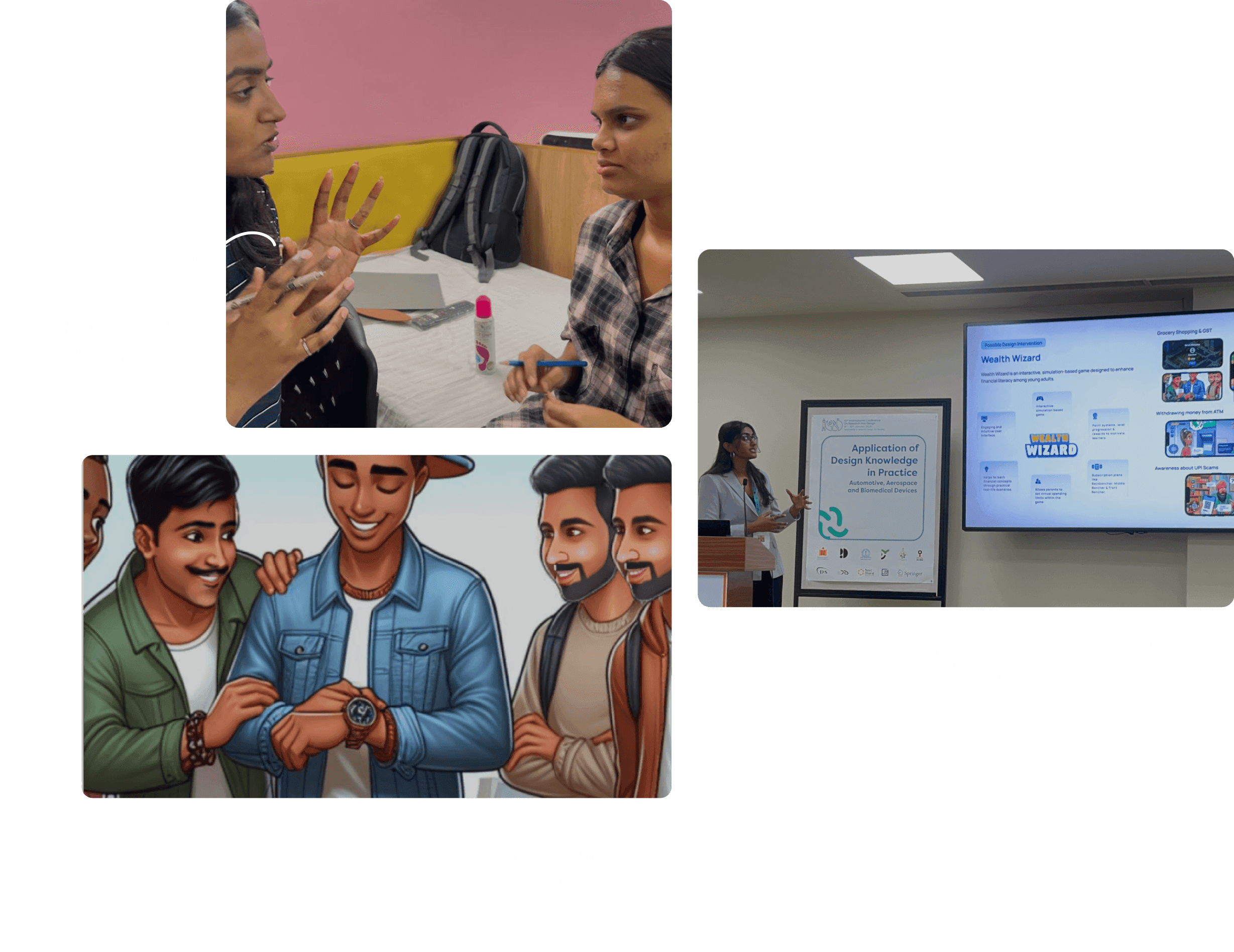
It ended with me presenting my research paper “Empowering Young Minds: Engaging Financial Education Through Interactive Games for Indian Schools” at ICoRD’25, IIT Hyderabad — a proud moment, as it was accepted for Springer publication!
A Missing Piece in Education
Due to a lack of financial education in schools and colleges, many young adults lack the financial knowledge and money-management skills required for their financial well-being.

What do studies reveal?
of youth in India don’t understand basic financial concepts, according to a 2014 global survey.
By Standard & Poor’s ↗
Despite government initiatives like RBI & SEBI programs (the NSFE 2020–2025 curriculum), literacy rates still continue to be Critically Low.
 A Timely Opportunity
NEP 2020 & NCFSE 2023 emphasise:
- Experiential learning
- Inquiry-driven education
- Technology-enabled learning
These policies validate the need for innovative learning solutions.
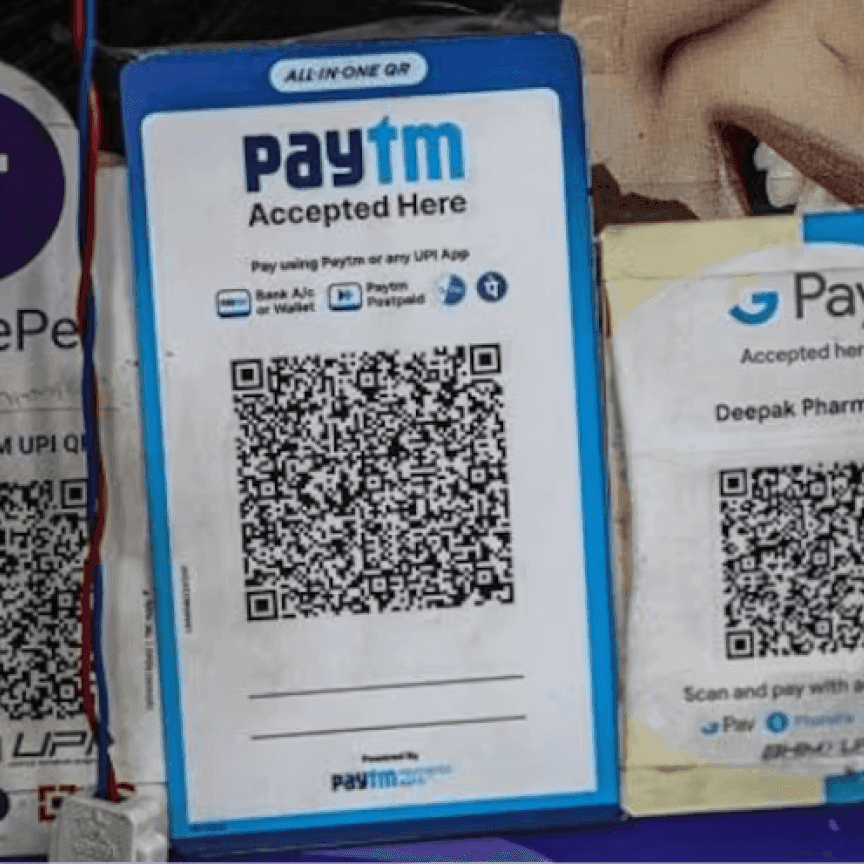
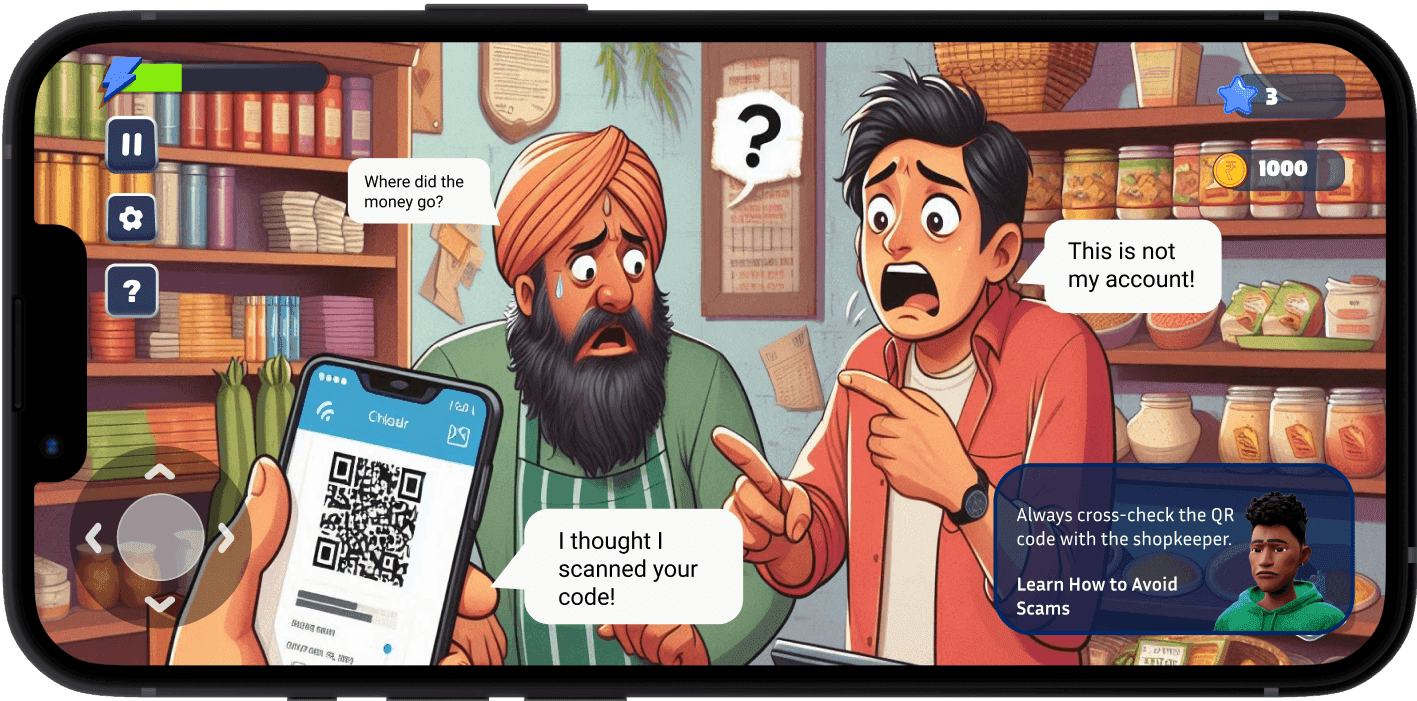
Fraudsters are secretly pasting their own QR codes over legitimate ones, diverting payments to their accounts.
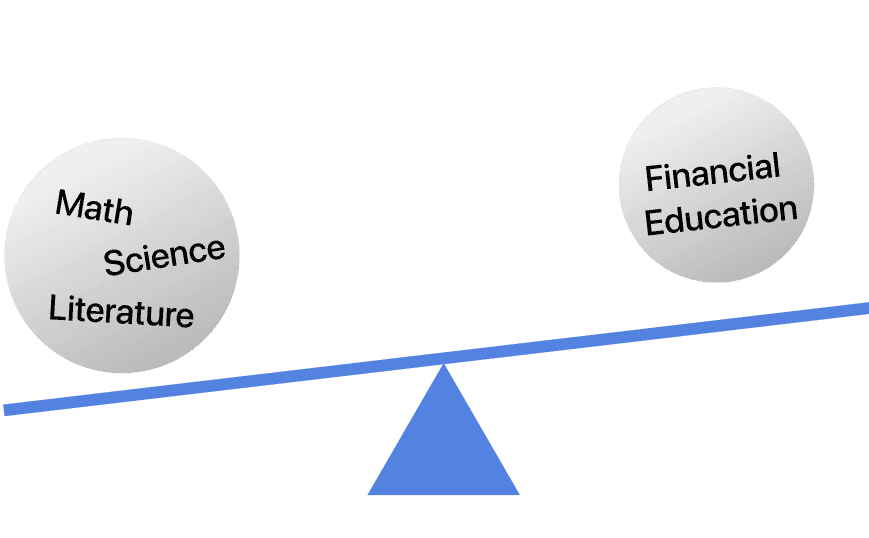
Schools prioritise subjects like Math, Science and Literature over financial literacy. Generally, financial education is overlooked in India’s school curriculum.
Gamification boosts student performance and confidence around money tasks by
89.4%A look at the existing tools
Limitations pinpointed Money Master Game
Relies heavily on text-based interactions and multiple-choice questions.
 Hay Day
Not explicitly designed for financial literacy.
 Township
Focuses on resource management, but lacks structured financial education.
 Money Magic
Little to no gamification to keep users engaged.
Understanding the Problem
A Google Form explored users’ awareness, experiences and struggles with financial literacy and received 70 responses. It was followed by 26 interviews across three age groups — 14–17, 18–20 and 21–24 — plus an additional interview with a finance expert to learn more about students’ attitudes towards personal finance.

“Dependency on parents for financial decisions has increased.”

“I’m still struggling to understand topics like loans, taxes and banking procedures.”

“No sense of spending money, since the wants and needs are unclear.”

“I need engaging learning methods.”
 Finance expert
“Lack of financial awareness leads to struggles in securing their future.”
“Money beliefs can influence financial behaviour.”
“Practical life simulations can be more effective than theoretical concepts.”
User Segmentation
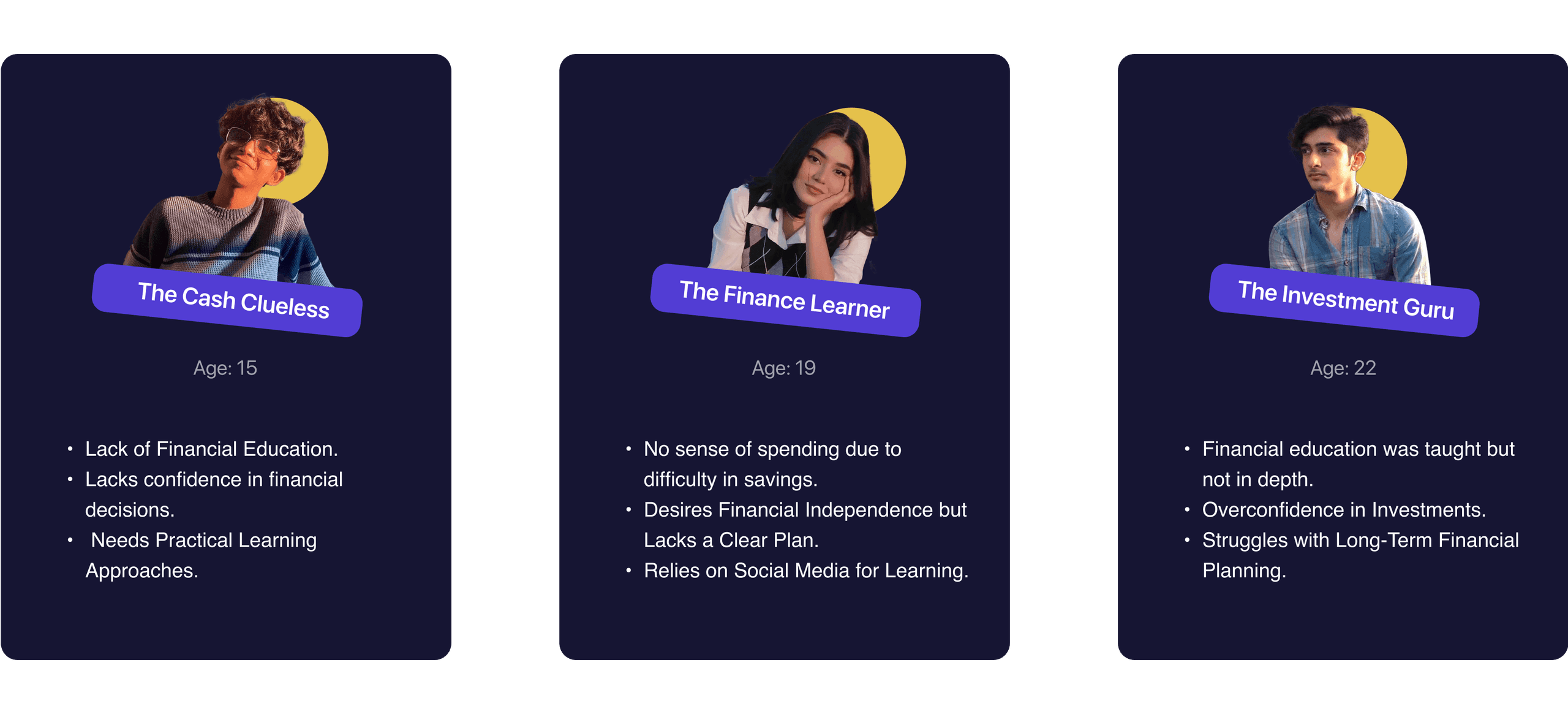
Users were segmented into 3 groups to map their expectations and emotions, followed by affinity mapping, user personas, empathy mapping and user journey mapping.
How Might We?
Behind the Screens
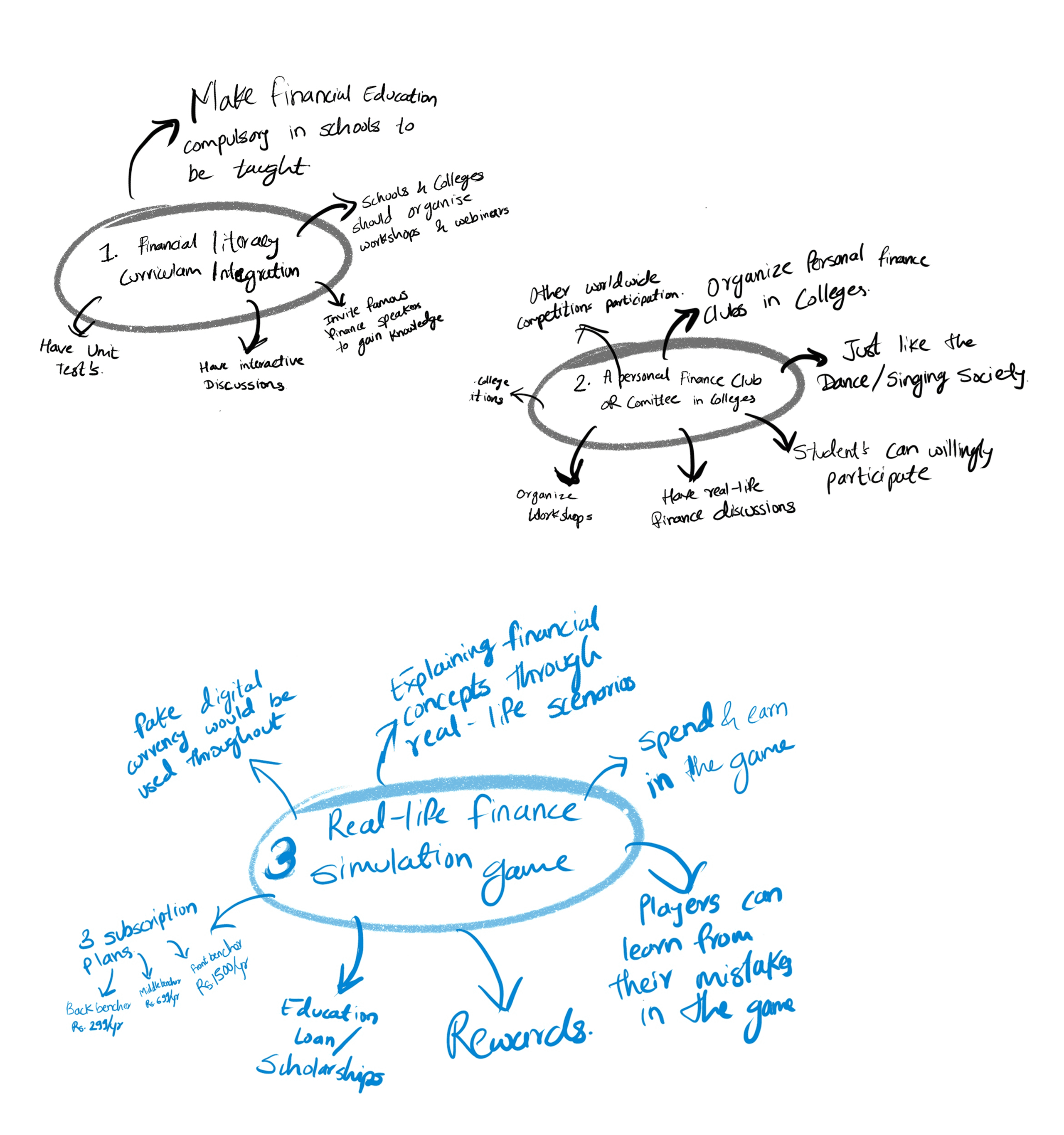
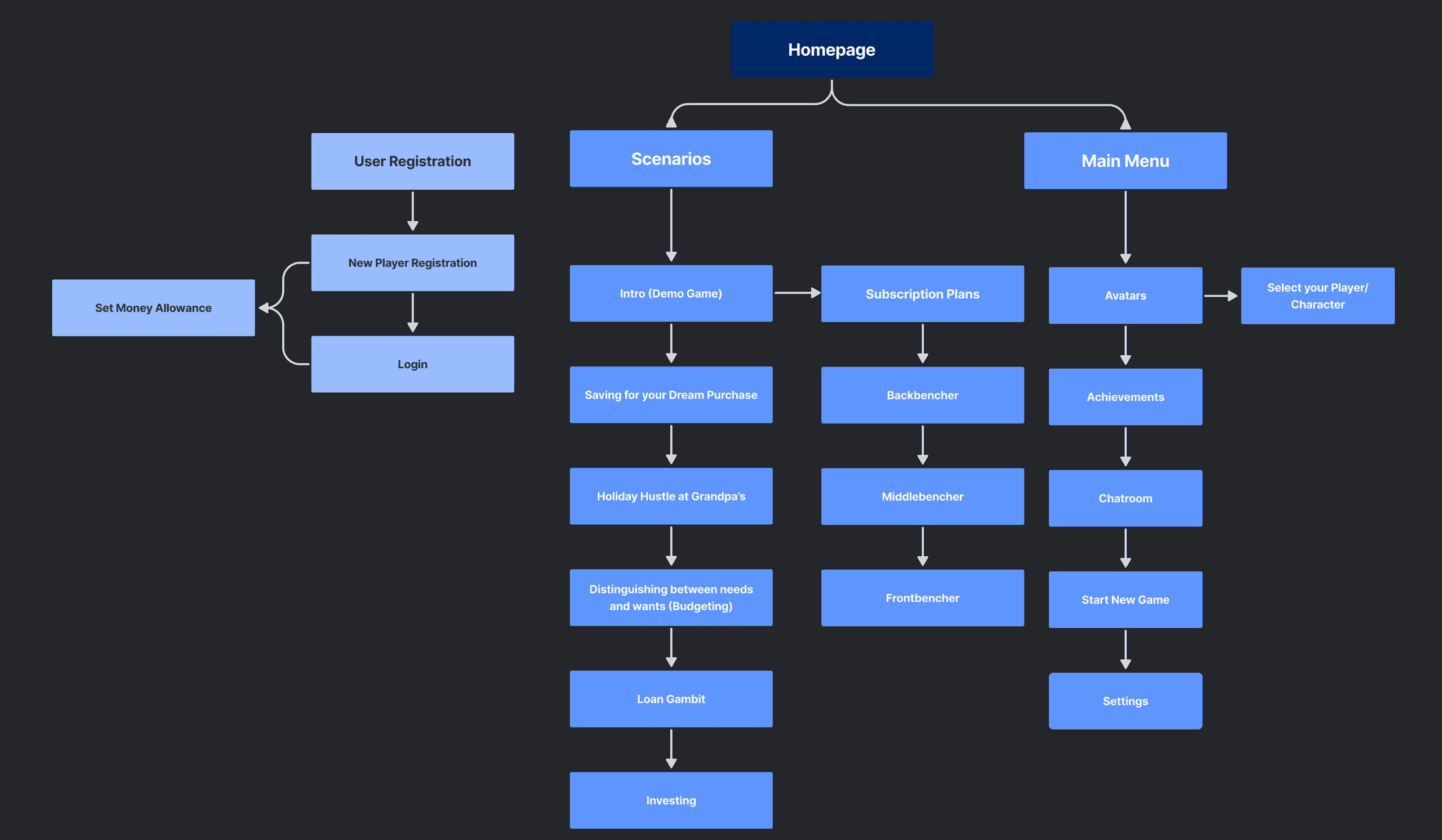
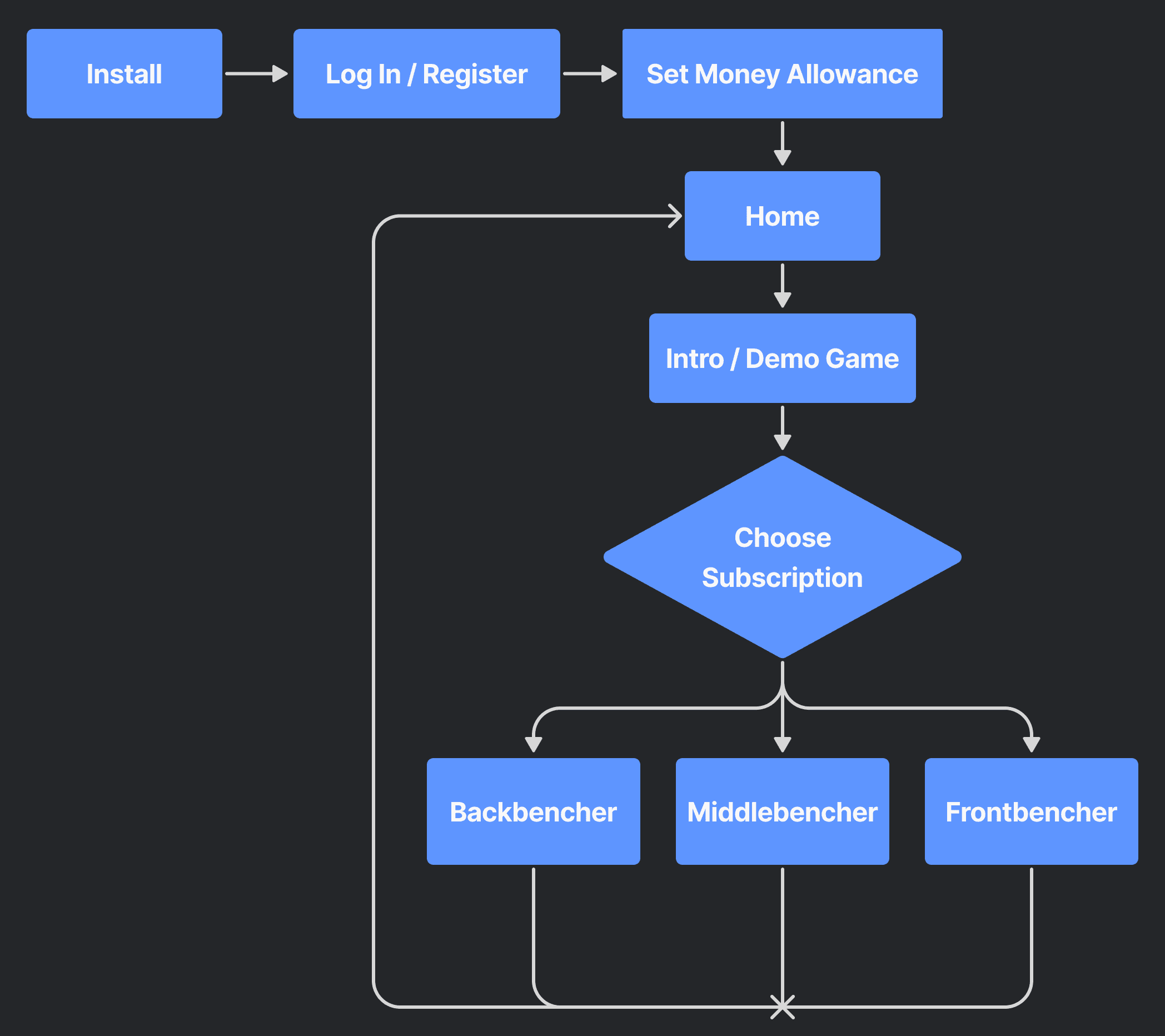
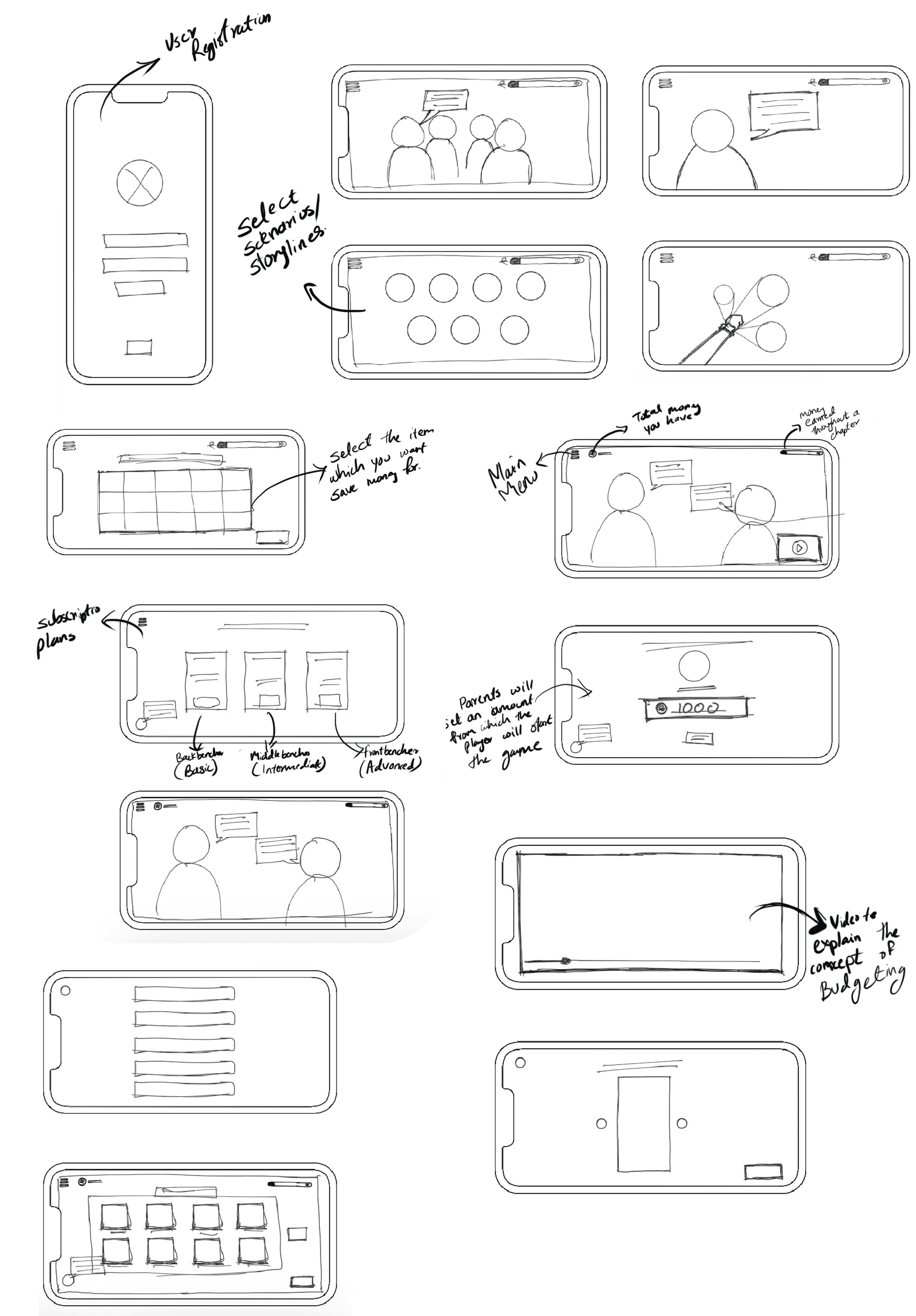
Storyboards → user flows → game concept sketches





Introducing Wealth Wizard

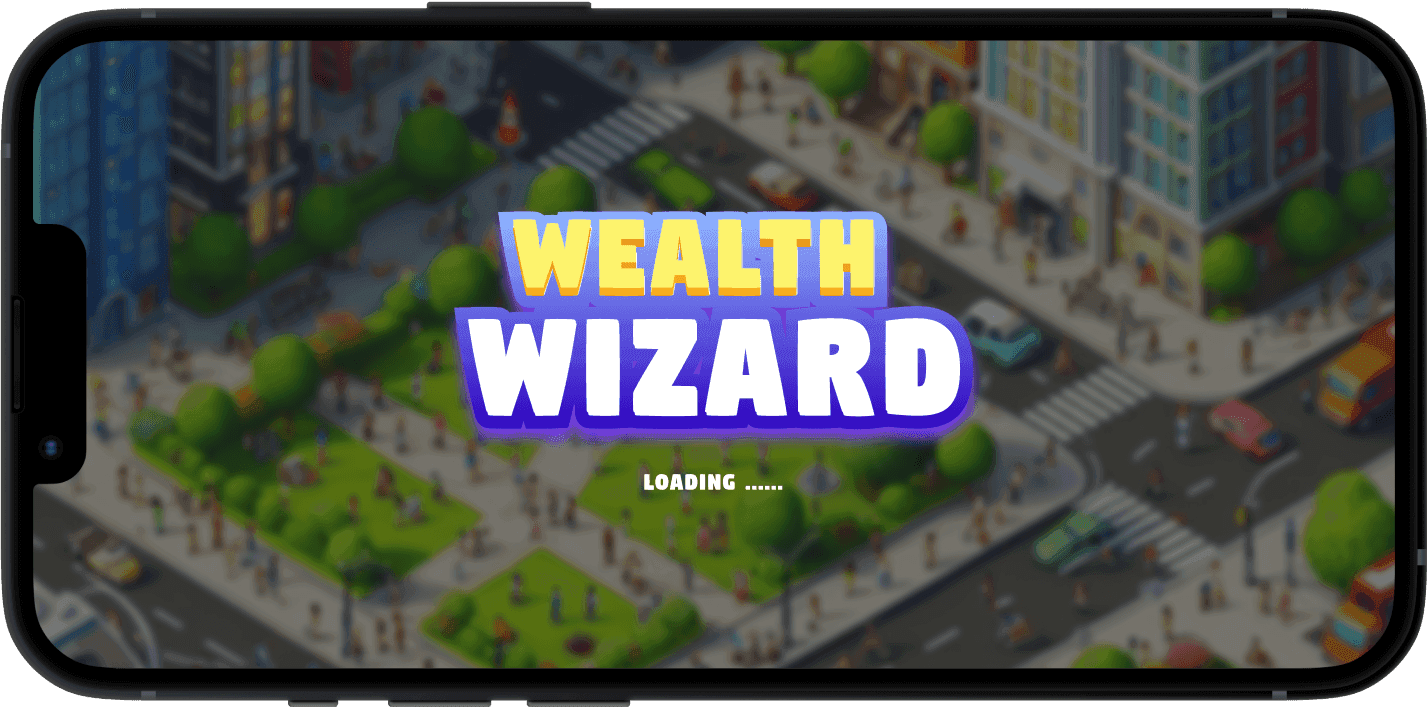
To bring the concept to life, Microsoft Designer (an AI generative platform) was used to create scenario images of the gameplay — visualising real-life financial situations and making the learning experience more immersive.
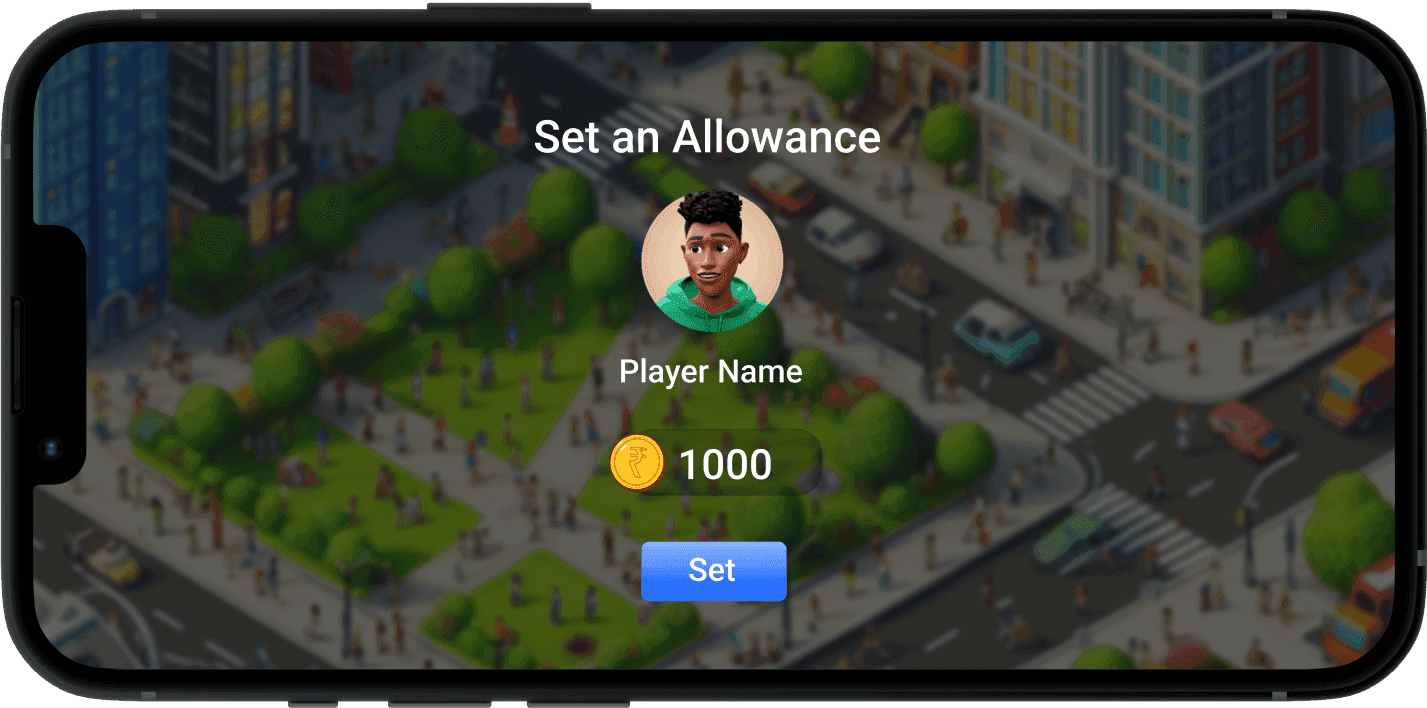
User Registration
- Players register by creating an account.
- Parents allocate a fixed amount as the player’s in-game monthly allowance.
- The assigned allowance becomes the player’s budget within the game.
Real Life Scenarios
- Real-life financial situations through engaging, story-based gameplay.
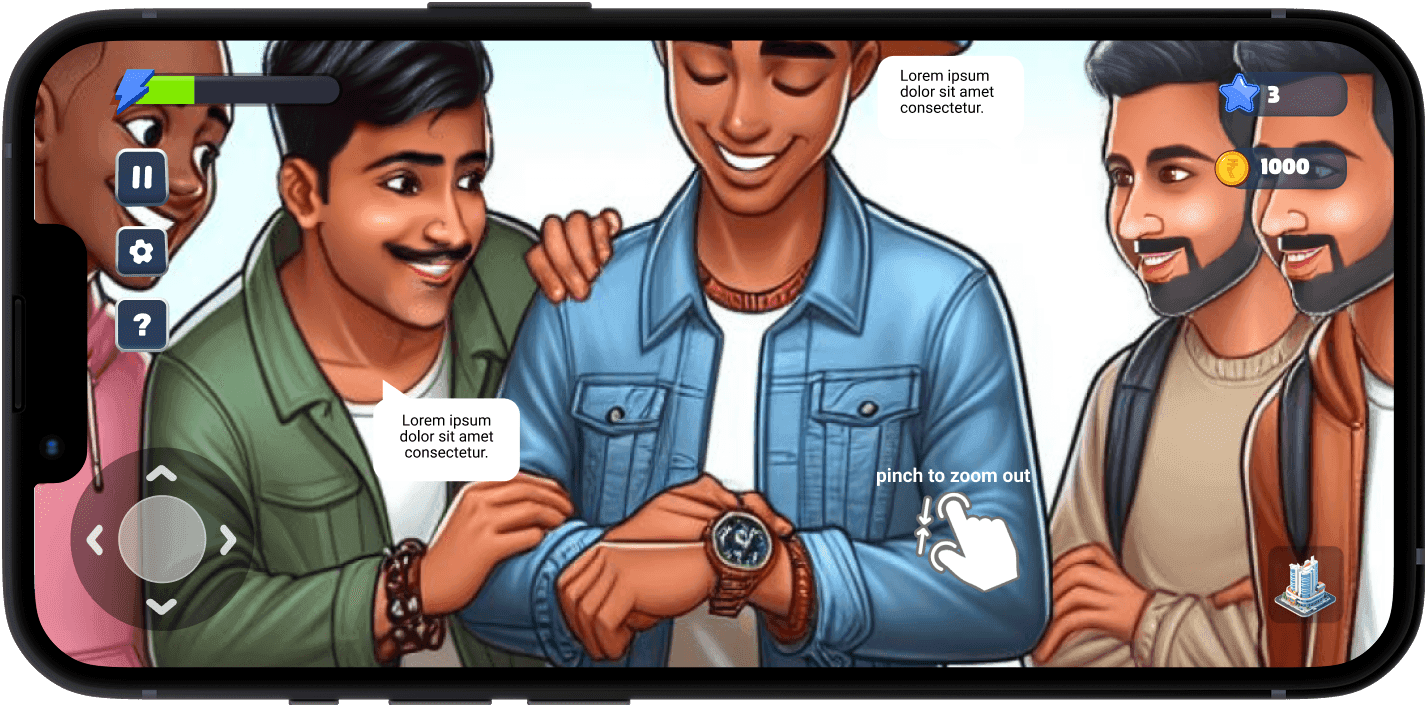
- A scenario shows a boy flaunting his new smartwatch, bought with his savings.
- A fake digital currency represents the player’s available funds.
- A horizontal bar visualises money earned or spent within each chapter.
GST Learning
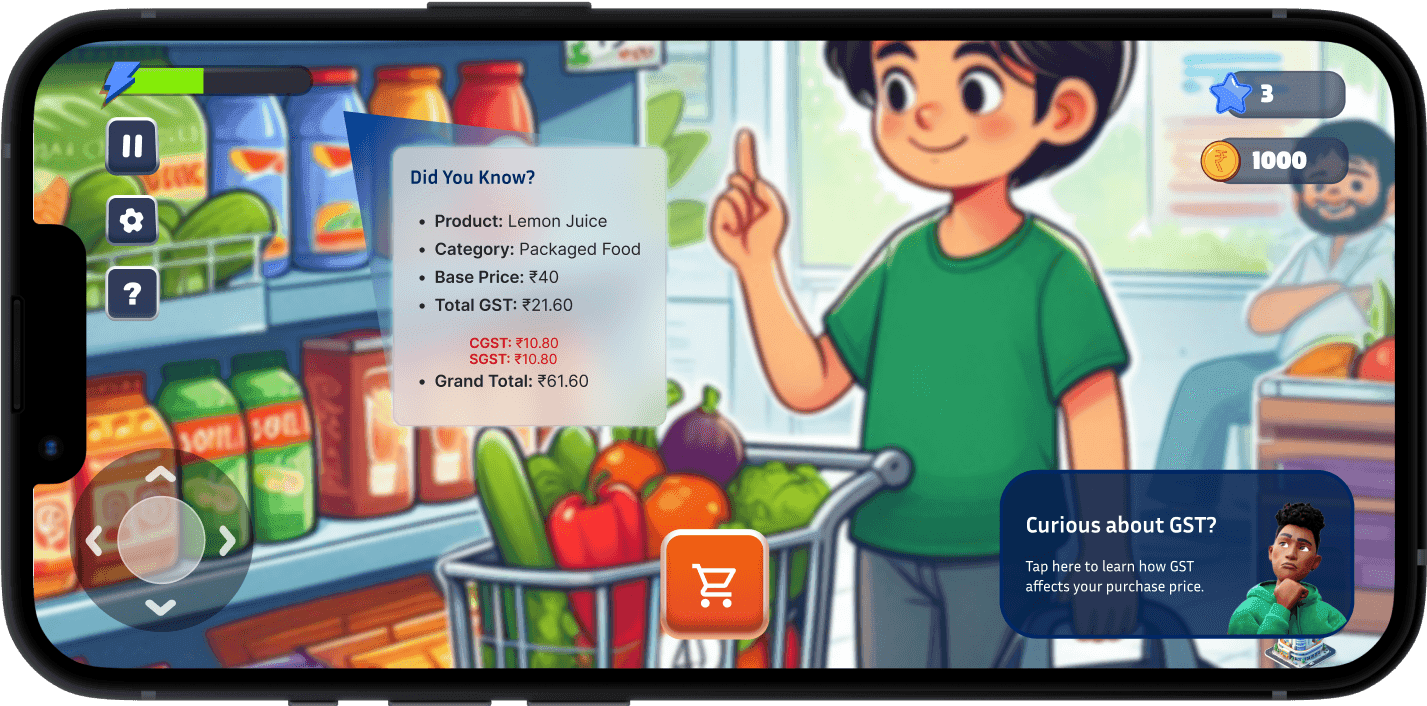
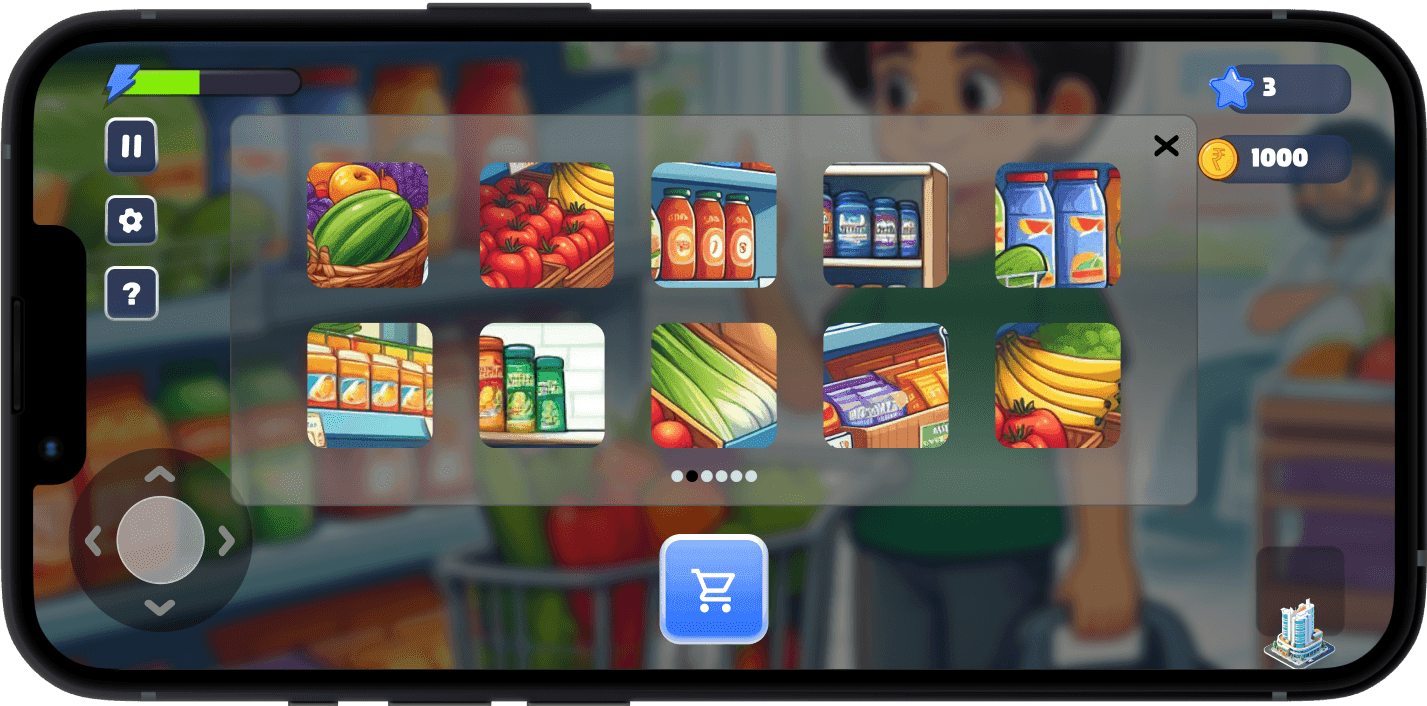
- A boy visits a grocery store to buy essential products.
- The UI displays the product price with GST added.
- Players learn how GST impacts the total cost of a product.
- Encourages better awareness of taxes in everyday purchases.
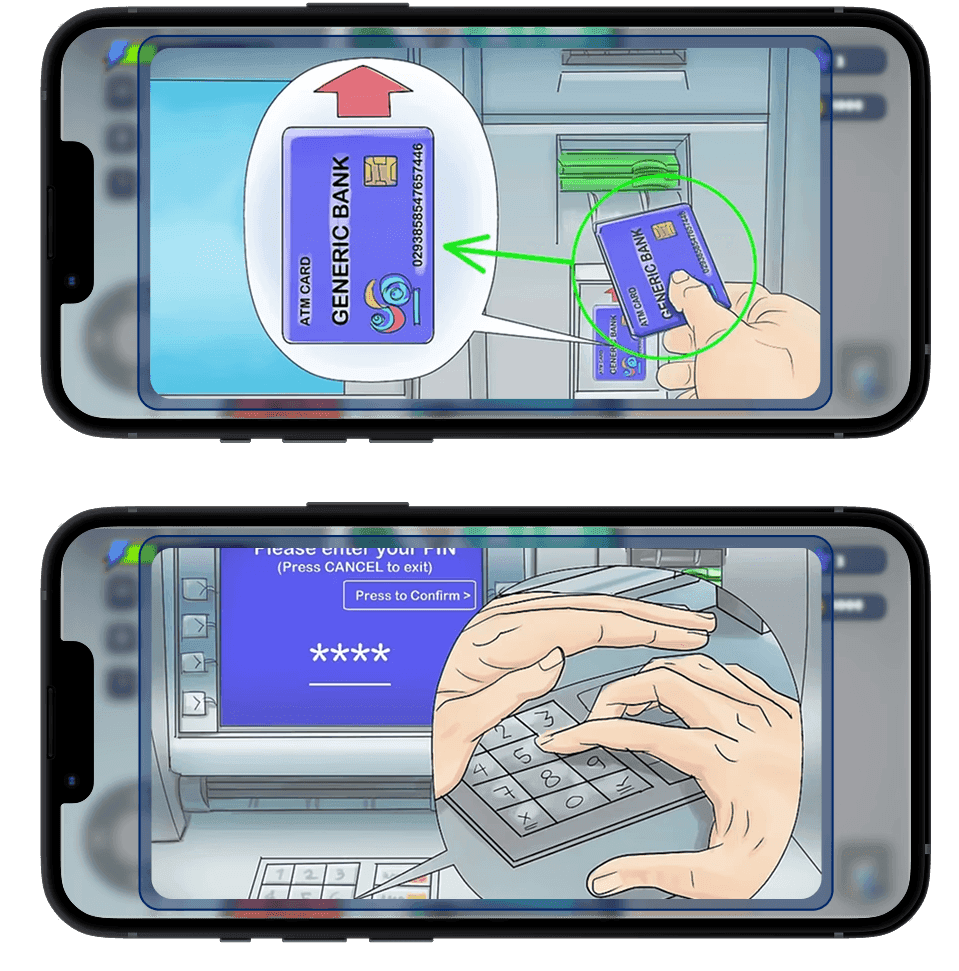
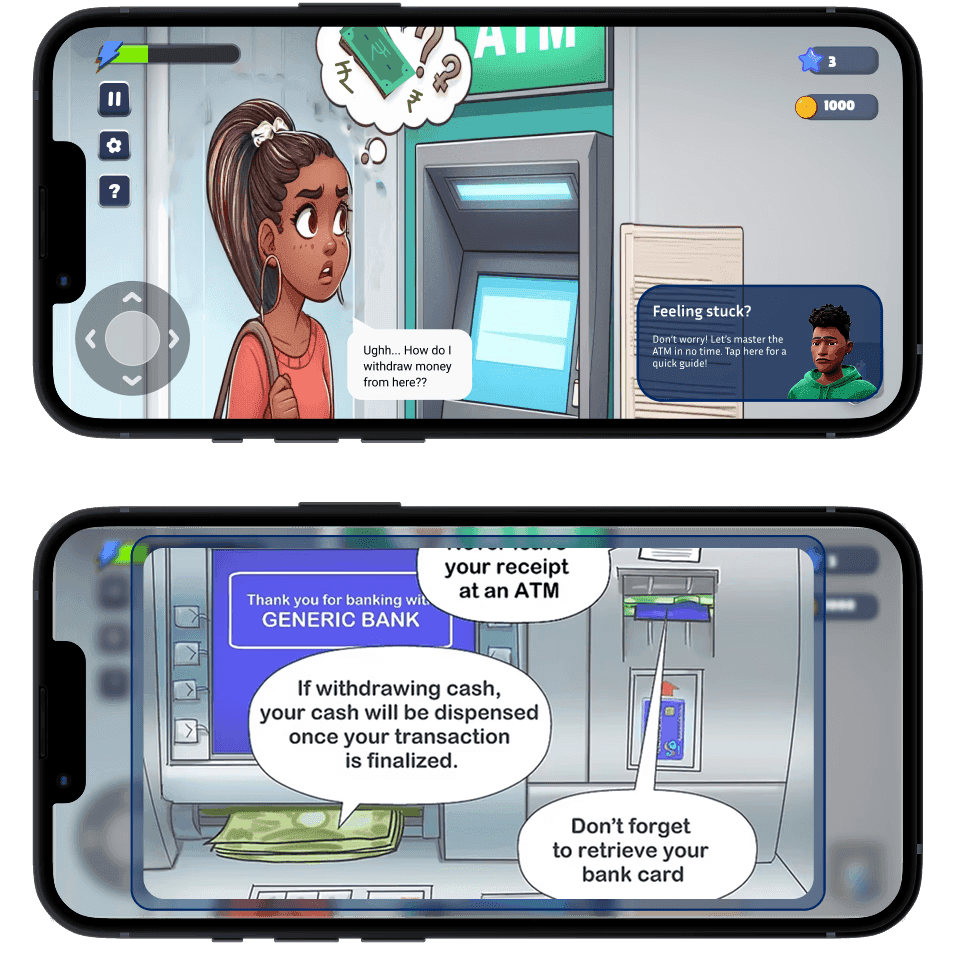
ATM Withdrawal
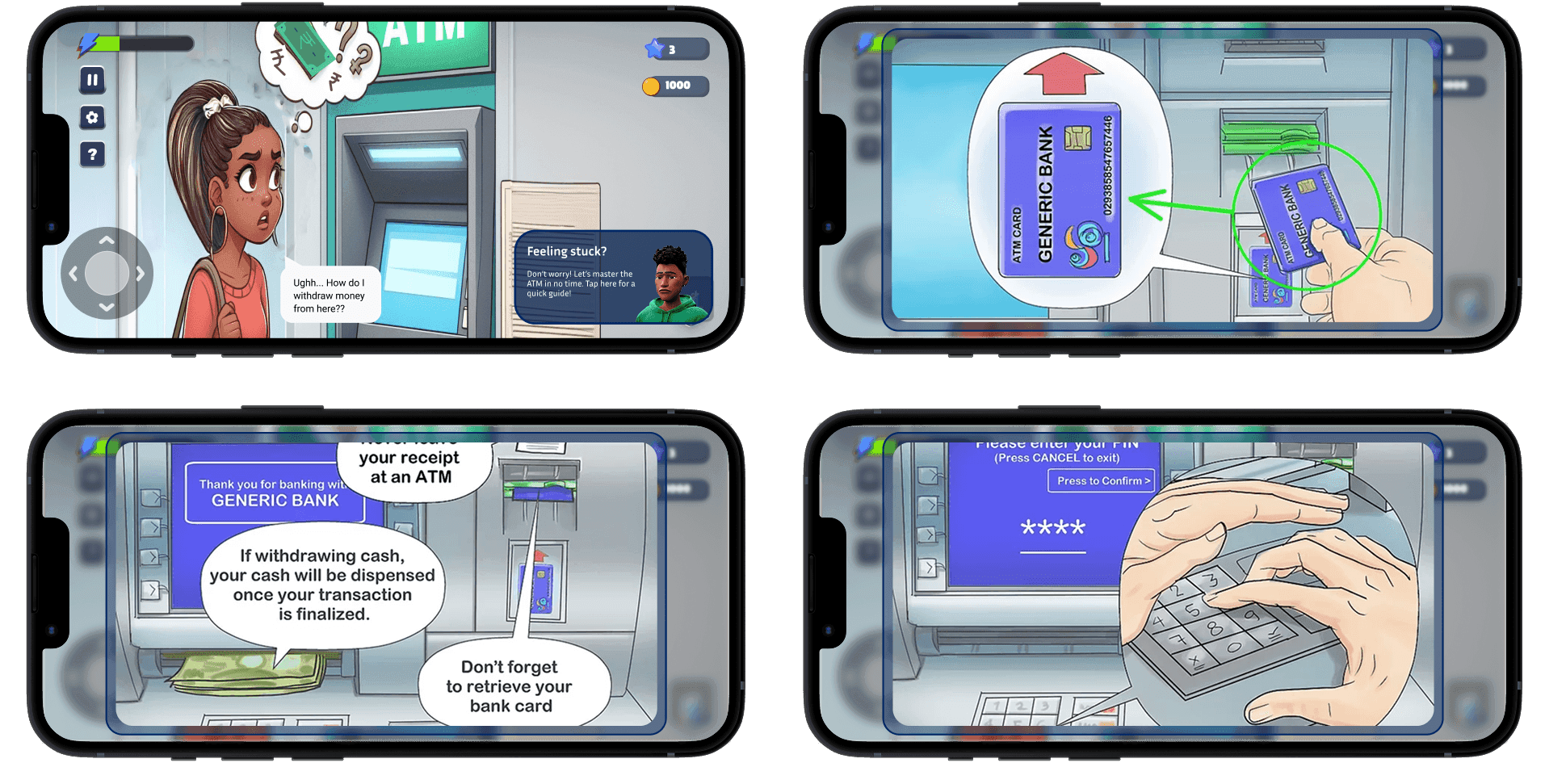
- Step-by-step arrow indicators guide students through the ATM withdrawal process.
- Players learn how to insert the card and securely enter the PIN.
- Users choose options like checking balance or cash withdrawal.
- Educates students on safe ATM usage and financial security.
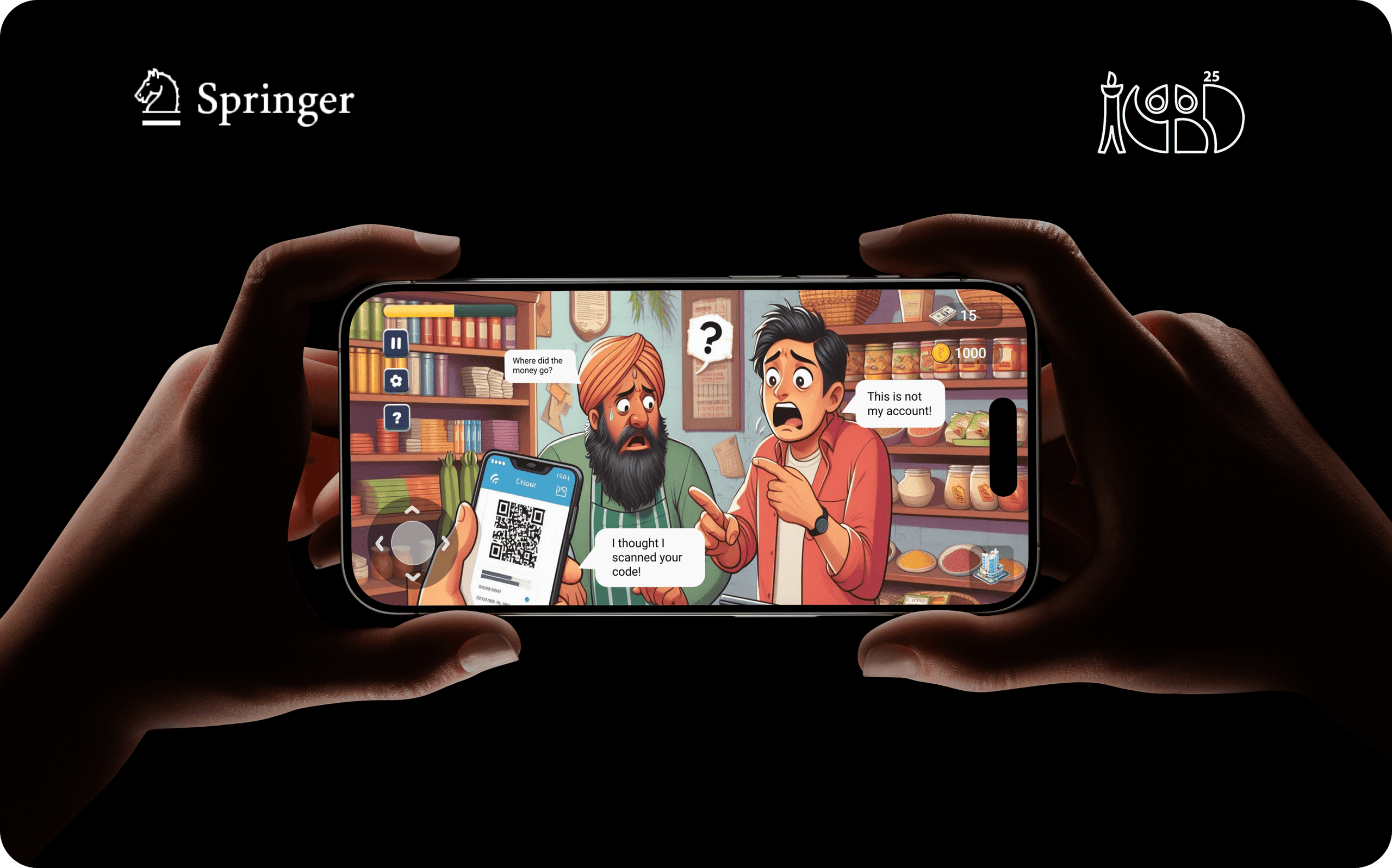
QR Payment Awareness
- Players learn how scammers replace genuine QR codes with fraudulent ones at local shops.
- Encourages checking the merchant name before scanning and confirming payments.
This trailer showcases the gameplay concept of Wealth Wizard, which I built in Unity to give a basic gist of it. The visuals may not accurately represent an Indian environment (due to the Unity assets available) — it was created purely for concept demonstration.
Accepted at ICoRD’25
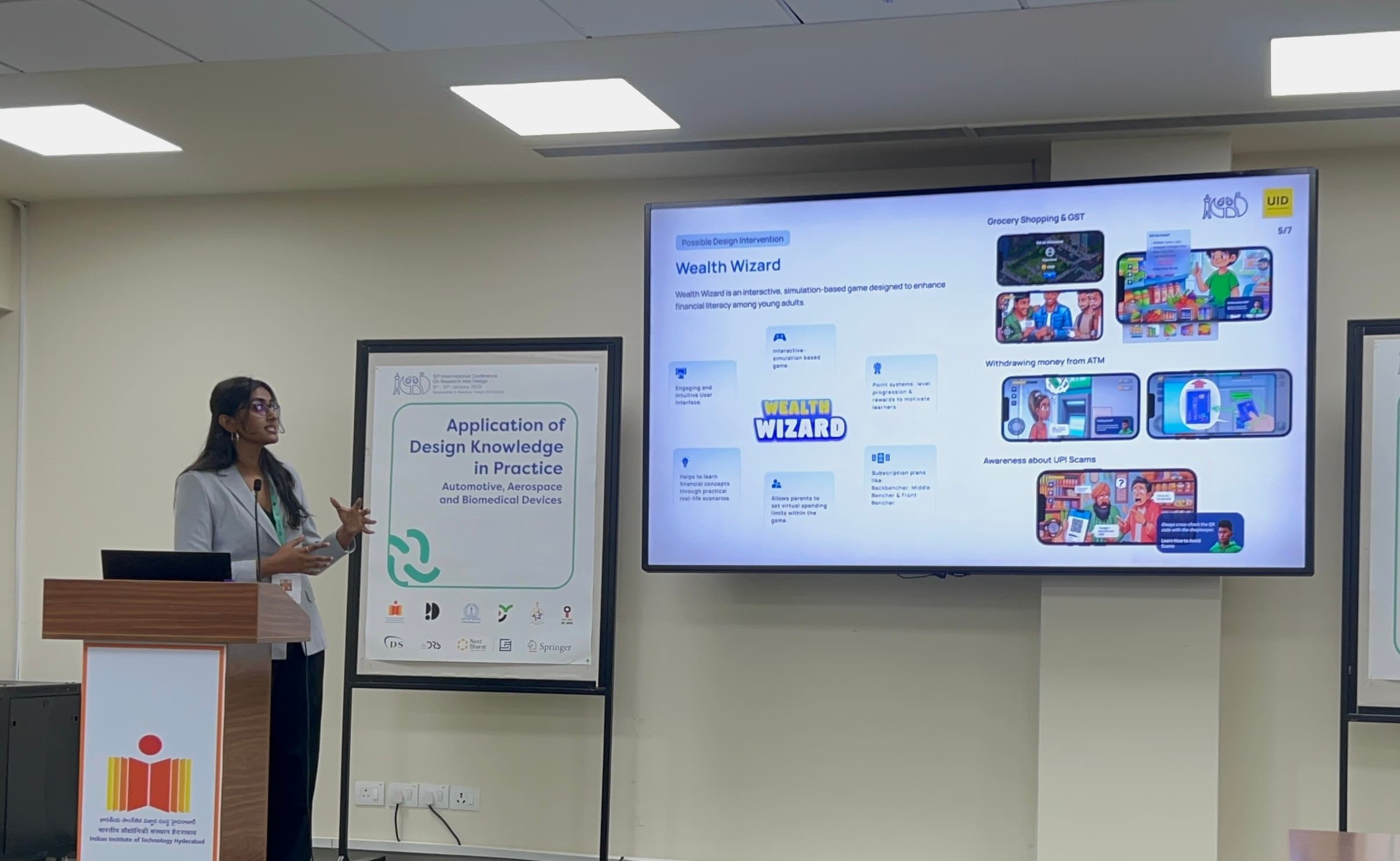

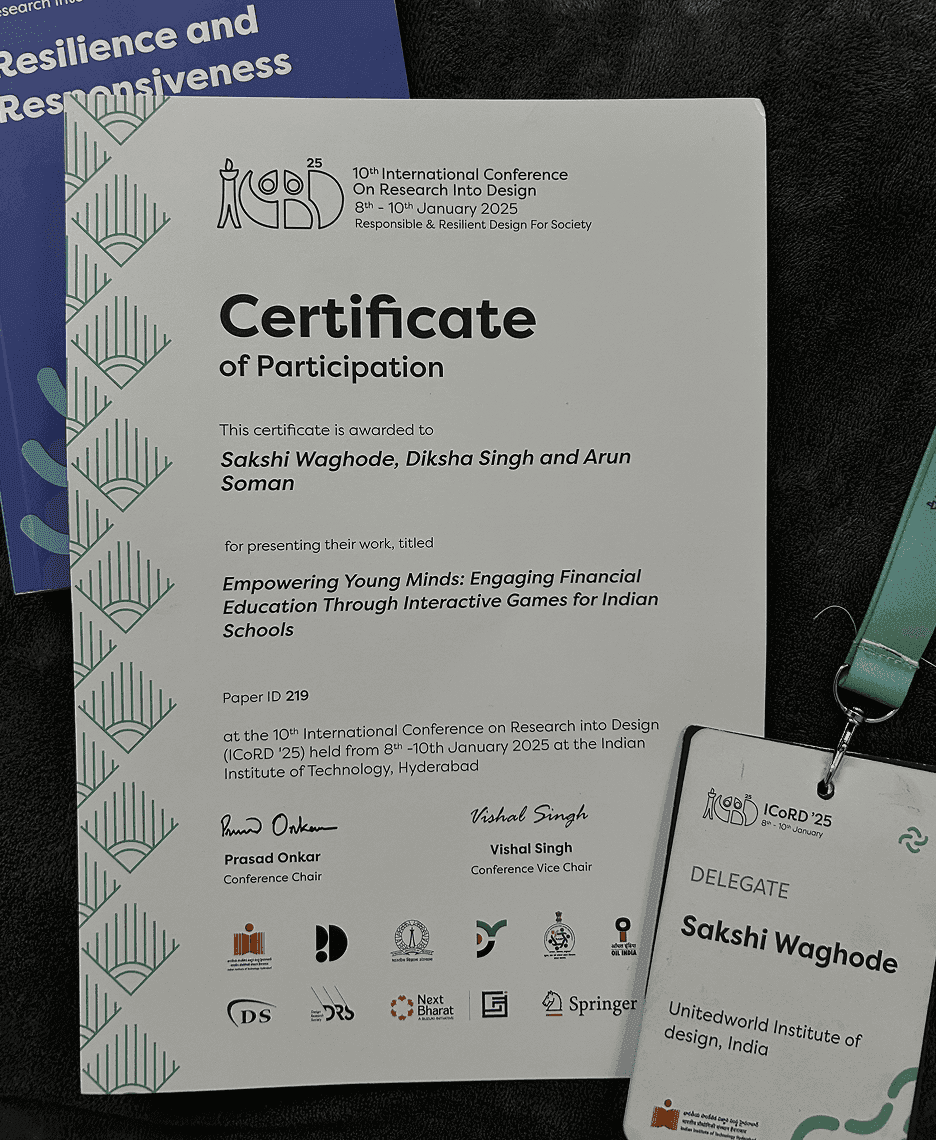
Empowering Young Minds: Engaging Financial Education Through Interactive Games for Indian Schools
I’m deeply honoured to have presented this research paper with my co-authors Diksha Singh and Arun Soman at the International Conference on Research into Design (ICoRD) at IIT Hyderabad. It was accepted for publication by Springer — a turning point that validated our commitment to this novel approach.
View AbstractKey Takeaways from this Journey
Our research highlighted gaps in financial education, shaping the design of Wealth Wizard. The effectiveness of gamified learning varies with individual engagement, so user testing and feedback will guide UI and concept improvements. Future plans include integrating AR technology for immersive learning — which needs further research to align with evolving student needs.